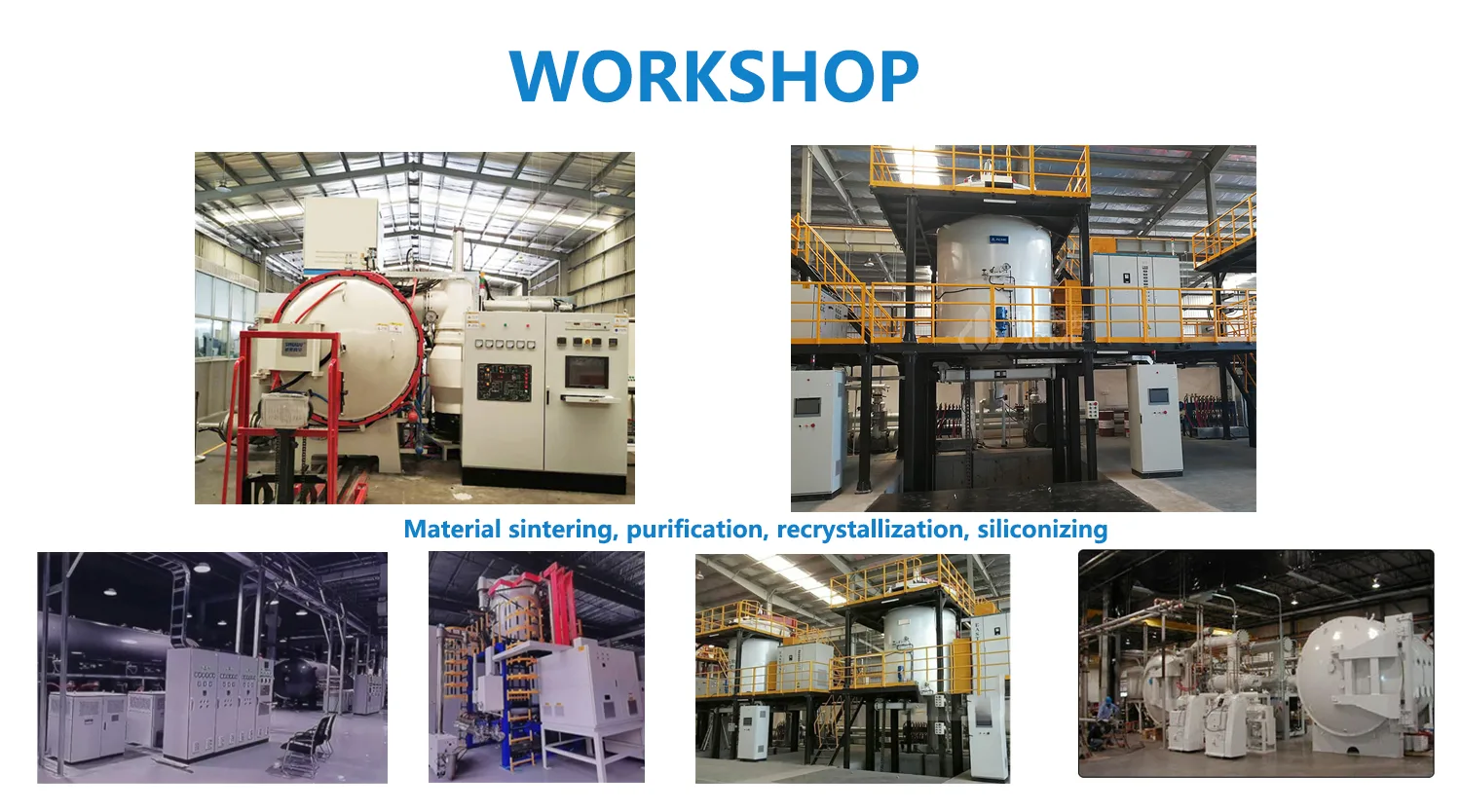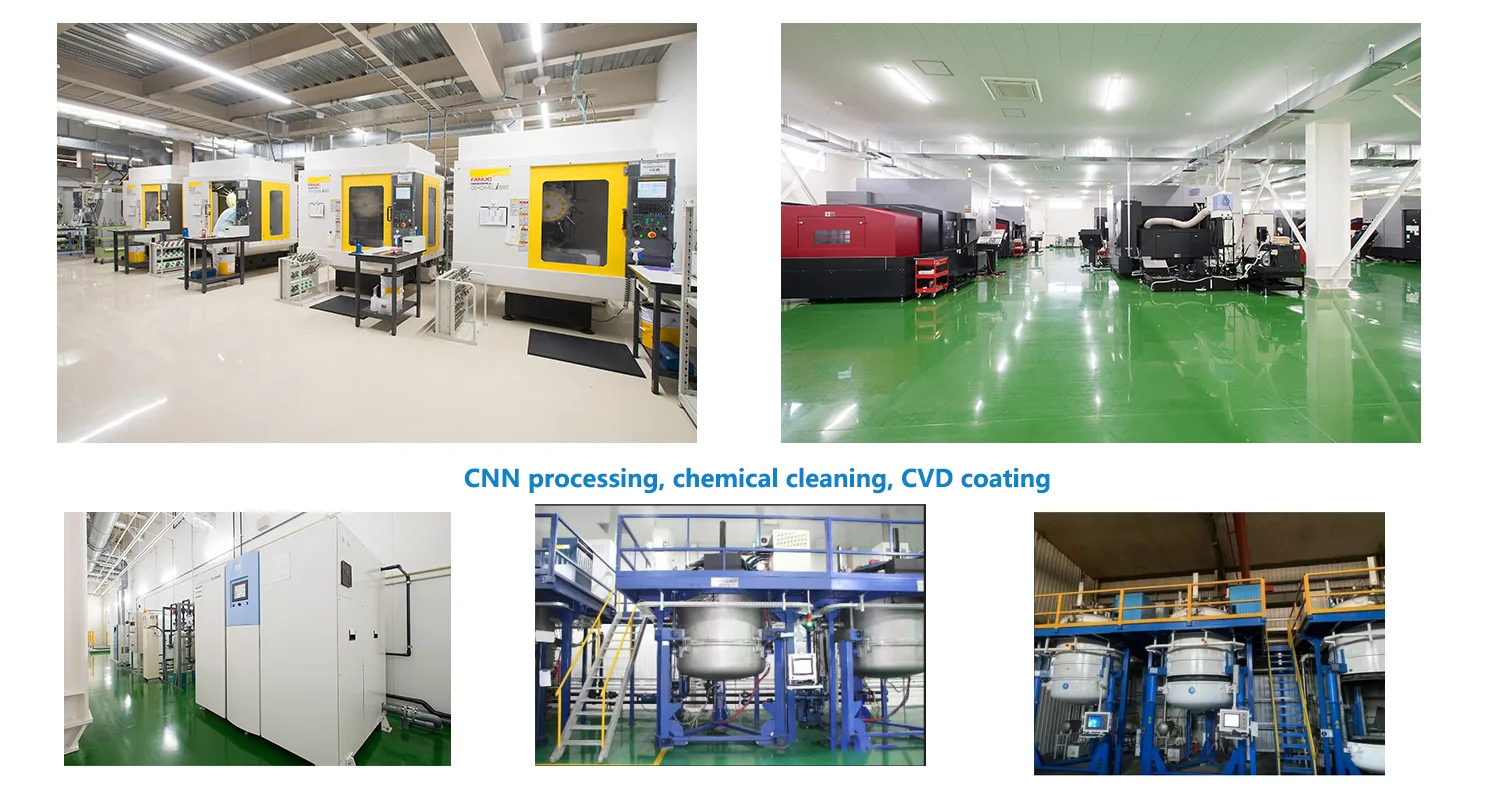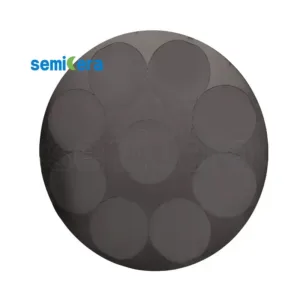
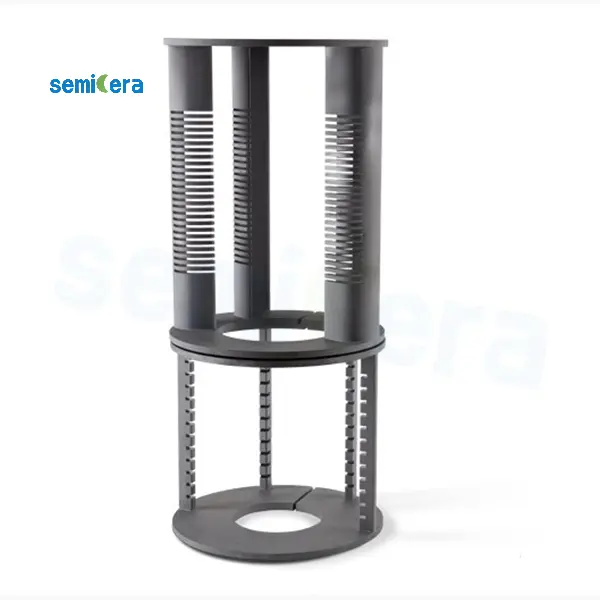
Semicera’s Recrystallized Silicon Carbide (R-SiC) is a high-performance ceramic material formed through high-temperature treatment above 2000°C. It retains the key advantages of silicon carbide, including excellent high-temperature resistance, corrosion resistance, oxidation resistance, and thermal shock resistance.
Thanks to its stable structure and no-shrinkage sintering process, R-SiC can be manufactured into complex and high-precision components with long service life and reliable performance in harsh working environments.
Semicera R-SiC is widely used in semiconductor furnace parts such as wafer boats, susceptors, and carrier structures, as well as other high-temperature industrial applications.
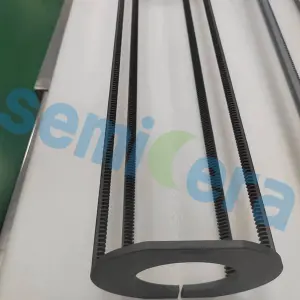
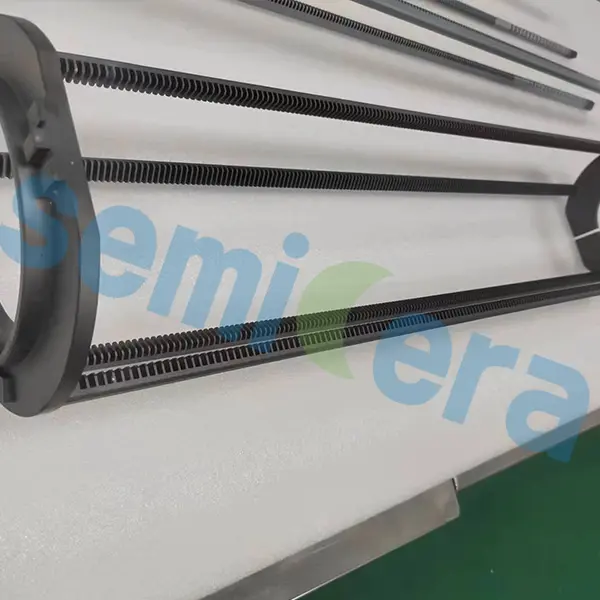
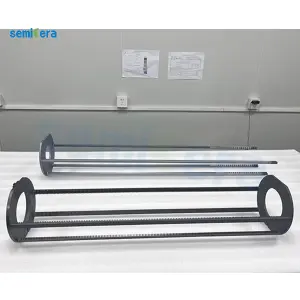
R-SiC is a high-performance ceramic material made by high-temperature treatment above 2000°C. It keeps most of the excellent properties of silicon carbide, such as high temperature resistance, corrosion resistance, oxidation resistance, and good thermal shock resistance.
1. Good mechanical strength
R-SiC has high strength and rigidity, and can maintain stable performance even under high-temperature and harsh working conditions. It also has good impact resistance and is not easy to break or deform during use.
2. Strong corrosion resistance
It can resist most acids, alkalis, and corrosive gases. Even in long-term use in harsh chemical environments, it can still keep stable performance and is not easily damaged.
3. Excellent thermal stability
R-SiC can withstand rapid temperature changes without cracking. It performs well in high-temperature processes and repeated heating and cooling cycles.
4. No shrinkage during sintering
During the recrystallization process, the material does not shrink, so there is almost no internal stress. This helps prevent deformation or cracking and allows the production of complex and high-precision parts.
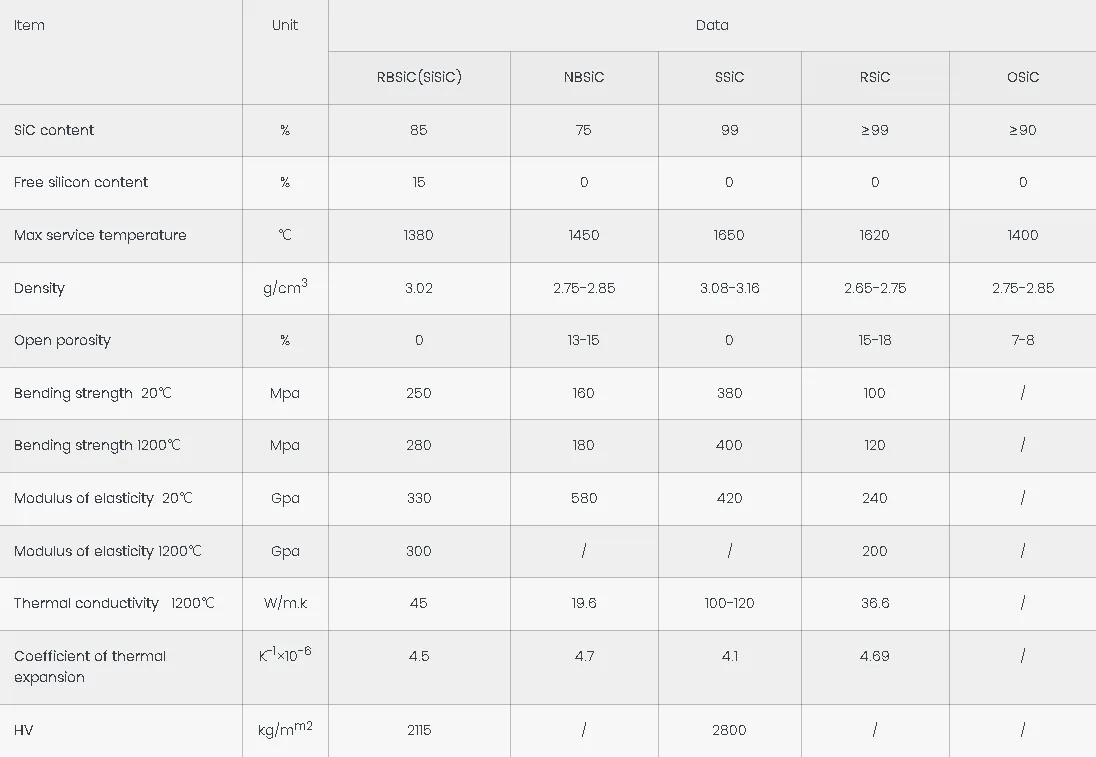
|
Material |
R-SiC |
|
Working temperature (°C) |
1600°C (Oxidizing environment) 1700°C ( Reducing environment) |
|
SiC content (%) |
> 99 |
|
Free Si content (%) |
< 0.1 |
|
Bulk density (g/cm3) |
2.60-2.70 |
|
Apparent porosity (%) |
< 16 |
|
Crushing strength (MPa) |
> 600 |
|
Cold bending strength (MPa) |
80-90 (20°C) |
|
Hot bending strength (MPa) |
90-100 (1400°C) |
|
Thermal expansion coefficient @1500°C (10-6/°C) |
4.70 |
|
Thermal conductivity @1200°C (W/m•K) |
23 |
|
Elastic modulus (GPa) |
240 |
|
Thermal shock resistance |
Extremely good |