CFC crucible solutions and Practices for Semiconductor crystal growth furnaces
By Lucy (Sales) @ semicera semiconductor technology co., ltd.
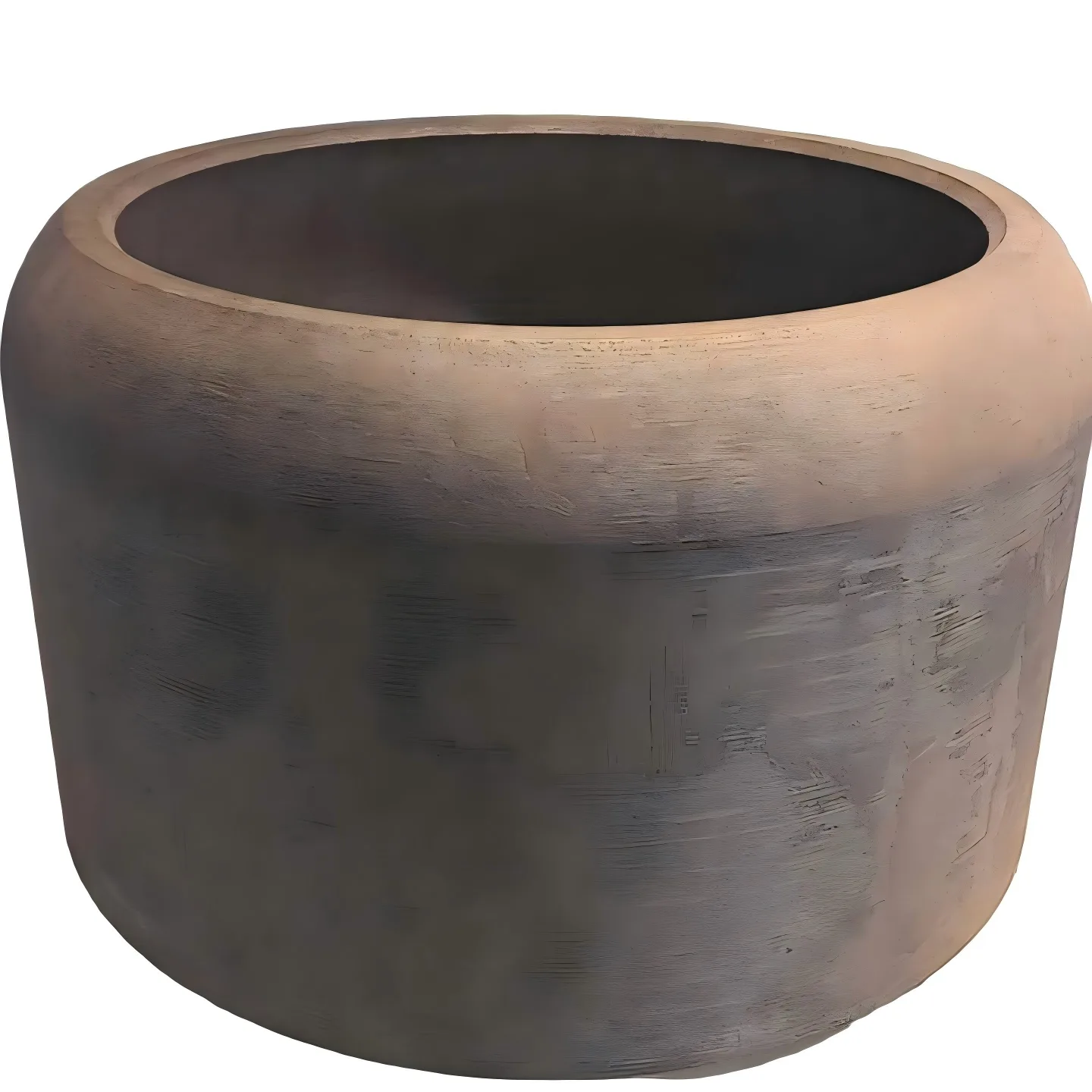
The CFC crucible, also known as a carbon/carbon composite crucible, is a high-temperature-resistant and high-strength container fabricated from carbon fiber-reinforced carbon matrix. It is primarily used in high-temperature thermal environments for semiconductor monocrystalline and polycrystalline silicon production.
Introduction to CFC crucible
The CFC crucible is a high-performance, high-temperature crucible fabricated with carbon fiber as the reinforcement and carbon as the matrix, formed through densification and high-temperature graphitization. Although its appearance is typically similar to that of a graphite crucible, its internal structure is entirely distinct.
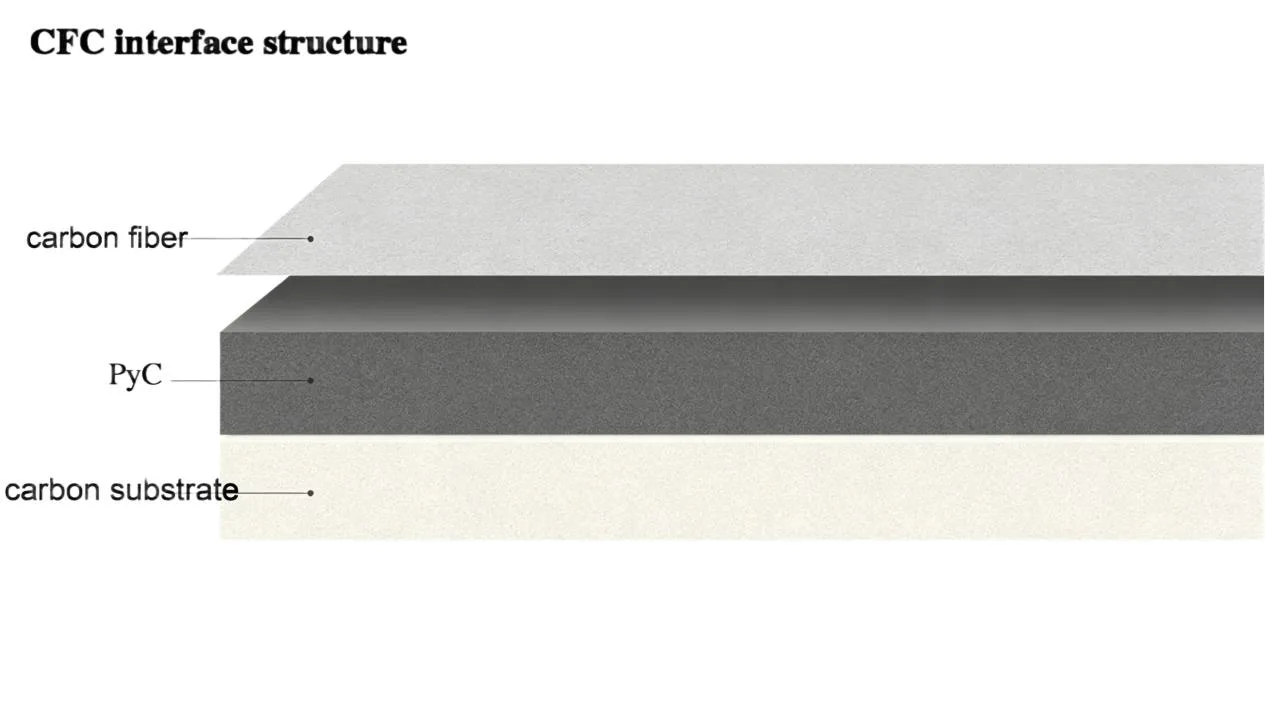
Typical structure: Carbon fiber + carbon matrix.
The internal components generally include: Carbon fiber, PyC, and Carbon Substrate (similar to the CFC structure).
Why choose CFC crucible?
The challenges associated with high-purity graphite crucibles
1. High-temperature deformation susceptibility: Traditional graphite crucibles are brittle materials whose internal strength relies primarily on the bonding between graphite grains to withstand external loads. Consequently, their strength declines sharply at elevated temperatures, leading to crucible collapse or dimensional instability.
2. Limited thermal shock resistance: Sudden temperature changes cause cracking, particularly under frequent heating and cooling cycles above 1800°C, significantly reducing service life and increasing the likelihood of cracks and spalling.
3. Insufficient durability for large-scale applications: As crystal sizes increase and temperatures rise, traditional graphite crucibles fail to provide the structural stability and thermal field uniformity required for large-scale single crystal growth.
|
Performance |
CFC crucible |
High-purity graphite crucible |
|
Densidad |
1.40 – 1.85 g/cm³ |
1.65 – 1.95 g/cm³ |
|
Resistencia a la flexión |
80 – 350 MPa |
14 – 55 MPa |
|
Compression strength |
130 – 380 MPa |
32 – 100 MPa |
|
Working temperature |
1350 – 3600℃ |
≤3000℃(inert atmosphere) |
|
Conductividad térmica |
10 – 30 W/m·K(anisortropy) |
100 – 200 W/m·K |
|
Thermal expansivity |
0.3 – 1.2 ×10⁻⁶/K |
2.5 – 4.5 ×10⁻⁶/K(Typical graphite) |
|
Porosity |
low |
higher |
|
Ash content |
≤65 ppm – 0.06% |
≤50–500 ppm(High-purity grade) |
|
Thermal shock resistance |
More strong |
Strong |
Advantages of CFC crucibles
1. High Strength: The CFC crucible employs a carbon fiber-reinforced carbon matrix composite structure. The carbon fibers serve as the reinforcing skeleton, bearing the majority of external stresses, while the carbon matrix facilitates stress transfer and ensures overall structural integrity. Due to their exceptional tensile strength and elastic modulus, the CFC crucible demonstrates significantly superior bending resistance, impact resistance, and structural stability compared to conventional graphite crucibles.
2. Crack propagation inhibition: The carbon fibers in the CFC crucible can induce a “bridging effect” during crack propagation, effectively preventing further crack propagation. Additionally, the fiber structure disperses local stresses and absorbs part of the fracture energy, leading to crack deflection or passivation.
3. High thermal shock resistance: The carbon fiber structure in CFC crucibles effectively mitigates thermal stresses and disperses localized thermal deformation through the fiber network. Additionally, carbon fibers exhibit high thermal conductivity in specific directions, reducing local temperature gradients and minimizing thermal stress concentration. Consequently, CFC crucibles maintain excellent stability even under frequent thermal cycling conditions.
4. Dimensional stability under high temperatures: The carbon fiber structure in the CFC crucible effectively mitigates thermal stress and disperses localized thermal deformation through its fiber network. Additionally, carbon fibers exhibit high thermal conductivity in specific orientations, reducing local temperature gradients and minimizing thermal stress concentration, with a thermal expansion coefficient of 0.3–1.2 × 10⁻⁶/K. Consequently, the CFC crucible maintains excellent stability even under frequent thermal cycling conditions.
5. Long service life: Due to their combination of high strength, excellent toughness, superior thermal shock resistance, and good high-temperature stability, CFC materials typically exhibit significantly longer overall service life in high-temperature environments compared to traditional graphite crucibles.
Semicera’s CFC crucible data
Semicera employs a densification process combining vapor-phase deposition and liquid-phase impregnation. This approach not only addresses the issue of uneven density associated with pure vapor-phase deposition but also utilizes high-purity, high-performance resin impregnation, resulting in enhanced densification efficiency for CFC crucibles, shortened production cycles, and extended product service life.
Densidad:≥1.35g/cm3
Working life:6-10 months
Technology
1. Preparation of Carbon Fiber Prefabricates
Using carbon fibers (short-cut fibers, fiber mats, or fabrics) as raw materials, Semicera processes the materials through layering, three-dimensional needling, and molding to form annular preforms. This process simultaneously enhances interfacial strength, improving both crack resistance and strength orientation, ultimately yielding porous carbon fiber preforms.
2. Immersion (first densification)
After forming the preformed crucibles, Semicera employs a vacuum impregnation process, where resin or asphalt is pressurized to penetrate the interior of the fibers, resulting in a composite green body containing an organic matrix.
3. Carbonization
After impregnation, Semicera subjects the organic material (resin/asphalt) to carbonization to convert it into carbon and form a carbon-carbon structural framework. Upon heating at 800°C–1200°C, the resin/asphalt undergoes pyrolysis, releasing gases (e.g., H₂, CH₄) while leaving solid carbon. Following carbonization, the resulting carbon fiber with carbon matrix forms a CFC structure; however, a single cycle of impregnation and carbonization yields a porous CFC structure.
To extend service life, Semicera performs multiple densification processes to continuously fill pores, enhancing density and strength. Lower porosity corresponds to greater strength and longer service life. The number of treatment cycles varies across facilities, leading to significant differences in service life. Semicera customizes the process according to customer requirements.
4. Graphitization
After completing several rounds of densification processes, Semicera implemented a graphitization procedure to enhance the performance of the CFC crucibles. At high temperatures ranging from 2200°C to 2800°C, this process transforms disordered carbon into a graphite structure, thereby improving thermal conductivity, mechanical properties, and high-temperature stability.
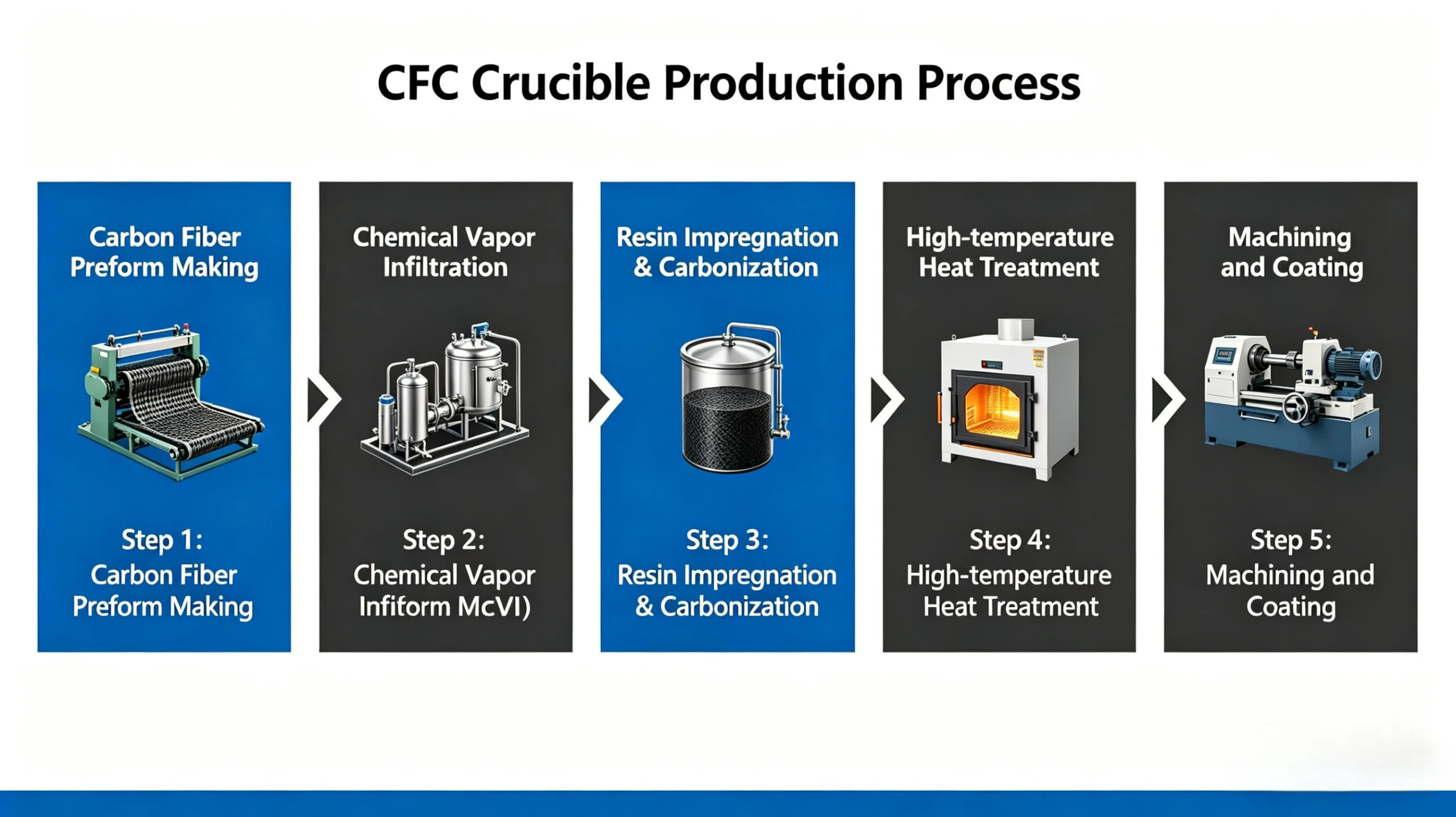
5. Precision mechanical machining
Upon completion of the high-performance CFC crucibles, Semiera’s CNC machining center performs precision finishing on the component, including inner and outer diameter machining, flatness control, and slot structure optimization, ultimately producing a flawless and precise CFC support ring.
6. Surface treatment (optional but critical)
Some customers require the CFC crucibles to have a longer service life and possess certain anti-oxidation and anti-corrosion properties. Therefore, Semicera also offers coating services, primarily pyrolytic carbon coatings.
CFC materials inherently possess a microporous structure, and the PyC coating effectively fills these surface pores, reducing gas permeation and impurity adsorption, thereby enhancing overall airtightness and cleanliness.
Secondly, during the growth of monocrystalline silicon or silicon carbide, the high-temperature atmosphere may erode the underlying carbon material. As a ‘sacrificial protective layer,’ PyC bears the brunt of the reactive environment, thereby extending the service life of the CFC crucible itself.
Third, improving thermal field stability. After achieving uniform coating, the surface radiation characteristics and thermal conductivity consistency can be optimized, resulting in a more stable temperature distribution, which facilitates quality control of crystal growth.
Furthermore, pyrolytic carbon can mitigate thermal expansion mismatch stress. During thermal cycling, the CFC matrix experiences stress variations with the external environment; as a transition layer, PyC absorbs part of the thermal stress, thereby reducing the risk of coating delamination or cracking.
Therefore, Semicera contends that applying a pyrolytic carbon coating to CFC crucibles is not merely about “adding a protective layer,” but rather enhances the crucibles’ stability and service life in high-temperature crystal growth processes through a triple mechanism involving structural sealing, interface optimization, and chemical protection. Consequently, Semicera recommends implementing the pyrolytic carbon coating to extend service life.
Choose Semicera
Choosing Semicera’s CFC crucibles means opting for a stable and reliable solution even under extremely high-temperature and demanding process conditions. Fabricated from carbon fiber-reinforced carbon-based composite materials (CFC) through precision needle-punching molding and high-temperature carbonization/grafitization processes, these crucibles combine high strength, low density, and exceptional thermal shock resistance. In advanced thermal applications such as monocrystalline silicon and silicon carbide crystal growth, they demonstrate superior creep resistance and deformation tolerance compared to traditional graphite crucibles, significantly extending service life while reducing maintenance and replacement frequency.
The Semicera CFC crucible can also be customized in structure and dimensions according to customer process requirements, balancing purity control with thermal field uniformity optimization to ensure stable performance even during prolonged high-temperature operation.
Choosing Semicera means opting for a key thermal field component solution that offers higher reliability, longer service life, and superior overall cost-effectiveness!