CFC Application for Semiconductor Thermal Field Components – Monocrystalline Silicon/SiC Growth Furnaces
The pain point of the original material—graphite
Before the widespread adoption of CFCs, the industry primarily utilized isostatic graphite as the material for thermal field structures and support components. These materials were cost-effective and well-established in processing, but their performance was significantly limited under extreme operating conditions. Traditional graphite is prone to creep deformation at high temperatures, leading to thermal field instability and compromised crystal growth quality. Additionally, graphite undergoes sublimation and oxidation in high-temperature environments, resulting in shorter service life, powder shedding issues that cause crystal contamination and reduced yield, and its unpredictable thermal conductivity makes it inadequate for the precise thermal field design required by advanced processes.
Under these circumstances, there is an urgent need to identify another material that exhibits high temperature resistance, minimal deformation, long service life, superior crystal quality, and low contamination risk to meet the stringent requirements of advanced processes for precise thermal field design. CFC materials have now emerged as the ideal solution!
What is CFC (carbon-carbon composite material)?
Definition: Carbon-carbon composite materials are fully carbon-based biphasic structural composites prepared using carbon fibers as the reinforcement phase and carbonaceous materials such as pyrolytic carbon, resin carbon, and asphalt carbon as the matrix. The fabrication process includes precursor weaving, matrix densification (CVD), high-temperature inert atmosphere carbonization, and graphitization.
The carbon fibers typically account for 30%–50% of the material volume; their continuous framework provides core structural strength, thermal shock resistance, and crack inhibition capability, while the carbon matrix fills the pores within the fiber precursors, enabling structural integration and effective load transfer.
The material’s mechanical properties, thermal conductivity, and high-temperature thermodynamic stability can be precisely controlled by adjusting the fiber weaving structure, fiber arrangement, densification process, and graphitization degree.
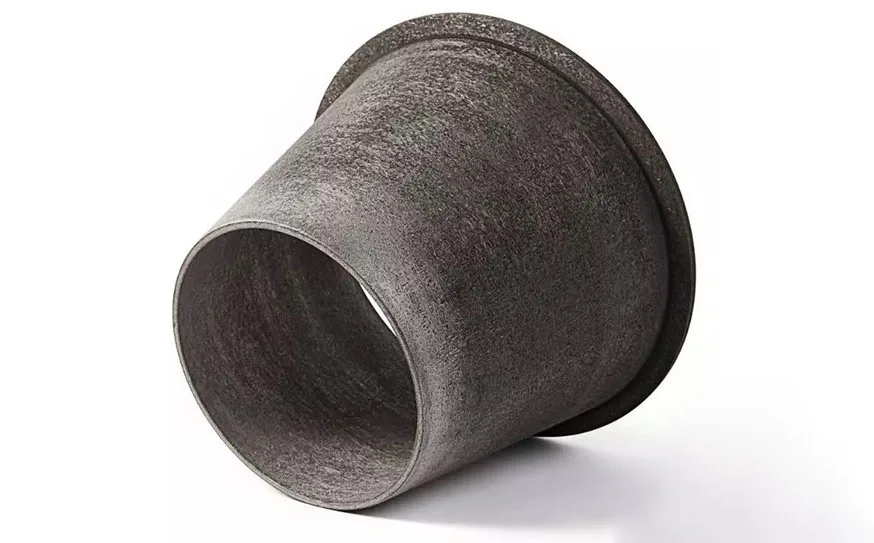
Why is high-purity PAN-based semiconductor-grade low-impurity carbon fiber chosen as the reinforcement phase?
PAN-based carbon fibers exhibit extremely low levels of native impurities, alkali metals, and heavy metals, making them resistant to volatilization and precipitation under high-temperature conditions. The silicon and silicon carbide crystal growth occurs in a sealed inert atmosphere at temperatures ranging from 1400–2400°C, preventing the volatilization and diffusion of impurities such as iron, sodium, and calcium found in conventional fibers, which could otherwise cause crystal contamination, lattice defects, and degradation of electrical performance.
Additionally, PAN-based carbon fibers demonstrate structural stability at high temperatures and excellent thermal shock resistance, making them suitable for multidimensional weaving processes. Furthermore, since carbon fibers employ CFC-based permanent reinforcement frameworks that cannot be deeply purified later, high-purity materials must be used from the outset to eliminate high-temperature contamination sources and ensure the purity and yield of the crystal-grown products.
Characteristics of CFC materials:
-Exceptional temperature resistance (suitable for long-term use above 2000°C)
-Outstanding creep resistance (minimizes deformation at high temperatures)
-Creep rate (1600–2000°C): 10⁻⁷ – 10⁻⁵ s⁻¹ -Excellent thermal shock resistance (no cracking under rapid temperature changes)
-Thermal expansion coefficient (CTE): 0.5 – 2.5 × 10⁻⁶/K, ensuring crack resistance and efficient thermal stress dissipation
-High compressive strength: 150–300 MPa
-Low density: 1.6–1.9 g/cm³ (lightweight yet structurally stable)
-Anisotropic thermal conductivity allows optimized heat distribution through structural design
Additionally, CFC materials can enhance oxidation and contamination resistance through subsequent coatings such as SiC or TaC.
What factors affect the service life of CFC materials?
The service life of any material is not fixed and is influenced by multiple factors:
1. In a single-crystal furnace, quartz crucibles (SiO₂) react with carbon at high temperatures: SiO₂ + C → SiO + CO, and the resulting SiO gas deposits on the CFC surface, altering the material structure (forming SiC or deposit layers).
2. Since CFCs are typically used for heating elements, flow tubes (flow tube/thermal field components), and support structures within the furnace, their material stiffness decreases under prolonged high temperatures. Continuous deformation and gradual bending occur due to long-term exposure to their own weight and assembly loads, leading to reduced thermal field uniformity. Concurrently, slow atomic-level slip and rearrangement in carbon-based materials cause flow tube deformation, changes in heater spacing, and thermal field instability within the furnace. Uneven stress distribution in structural joints, openings, and corners also facilitates crack formation.
3. The service life of CFC materials varies significantly across different manufacturers, primarily due to differences in the density selected by each facility; however, lower porosity generally correlates with greater durability. Some manufacturers may not apply antioxidant coatings, which also affects the service life. Additionally, variations in initial fiber structures (e.g., 2D vs. 3D) contribute to differences in lifespan. Different manufacturing processes further influence the service life.
Semicera:
Through extensive research and continuous process refinement, Semicera has developed advanced mechanical systems. From its inception, the company primarily employed 3D weaving technology for fiber structures, significantly reducing the porosity of CFC materials.
Additionally, Semicera utilizes specialized equipment for applying anti-oxidation coatings to extend the service life of CFC products.
Process
Semicra employs a specialized production workflow supported by dedicated equipment.
1. For prefabricated body fabrication:
High-purity carbon fibers (primarily PAN-based with semiconductor-grade low impurities) are selected.
They are processed into preform blanks through two-dimensional/three-dimensional weaving, needle-punching, and lamination sewing.
These preforms serve to establish a continuous fiber matrix, determining the material’s fundamental strength, thermal shock resistance, and anisotropic properties.
Semicera’s equipment :
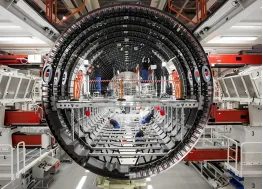
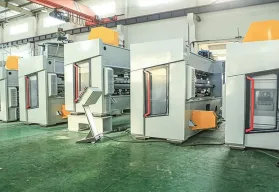
Semicera’s equipment includes three-dimensional weaving machines and carbon fiber needle-punching machines, enabling the production of three-dimensional integral preforms such as cylinders, discs, custom shapes, and thick plates.
2. Densifying
The Semicera densification process offers two methods: CVD (Chemical Vapor Deposition) and liquid-phase impregnation-carburation.
① CVD Chemical Vapor Deposition (the mainstream method for high-end crystal growth in CFC processes):
Hydrocarbon gases (e.g., propane, methane) are introduced into the high-temperature furnace
High-temperature cracking generates pyrolytic carbon, which is deposited layer by layer to fill the fiber pores
Vantaggi: high purity, uniform structure, suitability for monocrystalline/SiC crystal growth thermal environments, and resistance to high-temperature corrosion.
Semicera’s equipment:
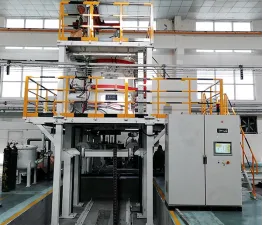
Semicera employs CVI/CVD chemical vapor deposition furnaces for densification of CFC carbon-carbon composites and SiC coating deposition, meeting the stringent purity requirements of semiconductor crystal growth thermal environments.
② Liquid-phase impregnation carbonization (resin/ asphalt impregnation):
Impregnation of precursors such as resin and asphalt → Curing → Carbonization. Multiple rounds of repeated impregnation and carbonization achieve gradual densification.
Advantages: Low cost; widely used in industrial-grade CFCS equipment from Semicera.
Semicera’s equipment:
Semicera also offers impregnation carbonization furnaces with integrated thermal systems that combine impregnation, curing, and carbonization/sintering in a single unit, better suited for CFC densification processes.
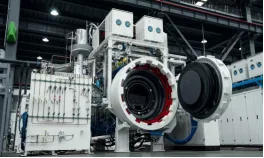
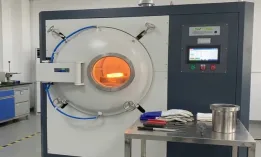
Semicera recommends different manufacturing processes based on clients’ specific requirements. Below are the detailed specifications and differences between these two processes:
|
Comparison Dimension |
CVD Vapor Deposition(High-end Crystal Growth) |
Liquid Impregnation – Carbonization(General Industrial Grade) |
|
Matrix Carbon Type |
High-purity pyrolytic carbon |
Resin carbon, pitch carbon |
|
Raw Material Medium |
High-purity gases such as methane and propane |
Synthetic resin, coal pitch, impregnating solution |
|
Purity Grade |
Semiconductor grade, ultra-low metallic impurities |
Relatively high impurities & ash content, unable to reach high purity |
|
Structural Uniformity |
Integral uniform structure, low internal stress |
Large internal-external density difference; prone to delamination & residual stress |
|
High Temperature Resistance |
Stable at 2200–2400℃, excellent thermal shock resistance |
Prone to decomposition & impurity precipitation at high temperature, inferior temperature resistance |
|
Air Permeability / Densification |
Ultra-low air permeability & high compactness |
Residual pores in abundance, high air permeability |
|
Production Cycle |
Long cycle with multi-round deposition |
Short cycle, suitable for mass production |
|
Manufacturing Cost |
High-end equipment, high energy consumption & overall cost |
Low-cost equipment, cost-effective with high cost performance |
|
Service Life |
12–18 months service life for crystal growth thermal field components |
Short service life; easy cracking, oxidation, and deformation |
|
Main Applications |
Monocrystalline silicon & SiC crystal growth furnace thermal fields, semiconductor high-temperature components |
Industrial furnaces, metallurgy, anti-corrosion, and general high-temperature heat insulation |
3.High-temperature carbonization + graphite treatment
Following the densification process, the material undergoes high-temperature carbonization and graphitization before entering the subsequent high-temperature heat treatment stage.
Carbonization and graphitization constitute the critical high-temperature shaping and deep purification steps for CFC carbon-carbon composites: carbonization removes non-carbon elements from organic precursors, converting them into a carbon matrix; graphitization, achieved through ultra-high temperature treatment exceeding 2200°C, induces carbon lattice rearrangement into a graphite structure while eliminating metallic impurities. This process endows the material with high purity, excellent thermal conductivity, high-temperature resistance, and thermal shock resistance, meeting the stringent requirements of semiconductor and photovoltaic crystal growth thermal environments.
Semicera’s equipment:
Semicera offers inert atmosphere carbonization furnaces/high-temperature graphitization furnaces. The equipment features fully automated control, with options for vacuum, inert atmosphere, or high-pressure conditions.
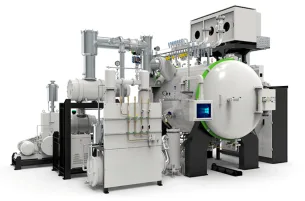
4. Machining and Finishing
To deliver superior services and products to customers, Semicera incorporates a finishing process after the aforementioned three stages. Through CNC machining and surface treatment, the company provides customized solutions tailored to client requirements, enabling the production of diverse products.
Semicera’s equipment:
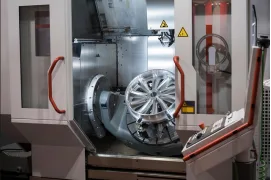
The Semicera system is equipped with a five-axis CNC machining center. It enables one-time clamping of highly pure CFC materials after carbonization/grafitization to perform precision machining of complex curved surfaces, high-precision holes and grooves, and irregular contours, ensuring dimensional accuracy, surface finish, and interchangeability of thermal fields.
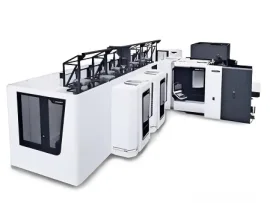
5. Aftertreatment
For the coating requirements of certain customers, Semicera also offers specialized equipment designed for coating applications, providing oxidation resistance and enhanced hardness.
Semicera’s equipment:
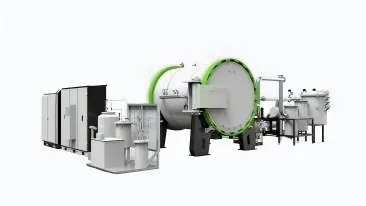
The Semicera system features SiC–CVD furnaces with a maximum temperature of 1500°C, achieving coating purity ≥99.9995%, and is compatible with semiconductor-grade thermal environments. It enhances resistance to high temperatures, oxidation, and contamination.
Choose Semicera
Semicera strictly adheres to a comprehensive production process, utilizing advanced core equipment from both premium imported and domestic sources to achieve fully self-controlled manufacturing of CFC carbon-carbon composites across all stages. From prefabrication and vapor-phase densification to high-temperature heat treatment, precision machining, and high-purity SiC coating treatment, each step is rigorously standardized and quality-controlled to precisely meet customized requirements for semiconductors, crystal growth, and other applications. Through stringent end-to-end quality management and comprehensive, meticulous services, Semicera delivers high-stability, high-purity premium carbon material solutions for its clients.
Through this series of manufacturing processes, Semicera offers a wide range of CFC material components, including insulation cylinders, insulation felt support structures, top cover/base supports, heat shield components, crucible support bases and other load-bearing and support elements, as well as flow guide cylinders and other thermal field control components.
Additionally, Semicera customizes products to meet specific customer requirements and provides excellent after-sales service.
Trust Semicera – choose Semicera, and thermal field stability ensures success worldwide!