Porous Graphite: The Heart of Silicon Carbide Crystal Growth
By Lucy (Sales) @ semicera semiconductor technology co., ltd.
As a representative of third-generation semiconductors, SiC demonstrates significant advantages in high-temperature, high-pressure, and high-frequency applications, making it an ideal material for next-generation RF devices and power devices.
However, SiC crystal growth faces challenges such as high difficulty, lengthy R&D cycles, and elevated costs, posing major challenges in reducing costs, increasing production volume, and improving quality. Porous graphite emerges as the optimal solution to this issue.
What is porous graphite?[Figure 1]
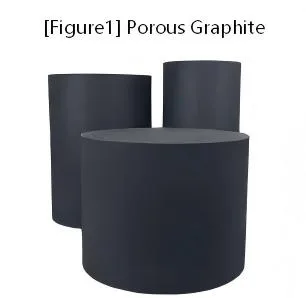
Porous graphite is a high-purity carbon material characterized by intact graphite crystal structure and abundant micron-scale interconnected pores. It combines graphite’s high-temperature stability with the permeability and mass transfer properties of porous structures.
This porous architecture not only significantly increases specific surface area but also forms stable gas-phase channels at elevated temperatures, enabling more precise control over the temperature field and airflow distribution during SiC growth.
Crystal framework: sp² hybridized hexagonal
Layered structure: van der Waals
Forces: temperature field modulation, mass transfer stability optimization, and defect control
Semicera’s porous graphite:
High porosity: up to 65%
Batch stability: Excellent consistency across production batches
Superior processing: Process tolerances enable ultra-thin cylindrical walls with thickness ≤1mm
Effect of porous graphite on silicon carbide growth?
The selection of porous graphite is primarily based on its compatibility with SiC growth characteristics and critical role in the process.
1. Homogeneous gas-phase transport
SiC growth relies on gas-phase atoms/molecules such as Si, SiC₂, and C₂ascending from the feedstock zone to the seed crystal. Porous graphite can prevent central material deficiency and edge overgrowth, stabilize the crystal growth interface, and ensure uniform crystal diameter without depressions or warping.
2. Improving temperature field uniformity
The porous structure exhibits lower and more uniform equivalent thermal conductivity, which can: mitigate localized high-temperature zones, flatten temperature gradients, and reduce thermal stress within crystals. It also decreases the probability of dislocation, slip, and cracking, thereby enhancing crystal structural integrity.
3. Adjusting the C/Si ratio in the gas phase
At high temperatures, porous graphite gradually releases carbon, increasing the carbon concentration in the gas phase. If the C/Si ratio is low, it is prone to the formation of impurity crystals such as 6H and 15R. If the C/Si ratio is moderate, stable growth of 4H-SiC (the only crystal form used in power devices) can be achieved.
4. Inhibit unnecessary recrystallization at the top of the crucible
Porous graphite blocks and distributes airflow, directing more vapor toward crystal growth rather than causing excessive vapor crystallization on the lid as seen with non-porous graphite, which results in waste at the top.
5. Dust and particulate filtration
Substance sublimation generates carbon particles and dust. The interconnected pores of porous graphite physically intercept particulate matter, preventing their entry into crystal structures to avoid the formation of inclusions, black spots, and microtube defects.
|
목 |
Without Porous Graphite |
With Porous Graphite |
|
Growth Rate |
20–30 μm/h |
+33% Increase |
|
Powder Source Utilization |
<30% |
+29% to ~59% |
|
Defect Density |
800–1,200 cm⁻² |
–52% Reduction |
|
(MPD)/Micro-pipe Density |
6–7 EA/cm² |
1–2 EA/cm² |
|
Max Shear Stress |
13.5 MPa |
Drop to 10.4 MPa |
|
Radial Temperature Gradient |
Large |
Gentler |
|
C/Si Ratio |
0.8–1.1 |
1.2–1.5 |
|
Top Recrystallization |
Severe |
Significantly reduced |
|
Crystal Thickness |
2.0–2.5 mm |
3.0–3.3 mm |
In summary, porous graphite is not a single-function material, but rather a key structural material that ensures the stability of PVT method growth by synergistically enhancing SiC crystal quality through four mechanisms: uniform gas flow distribution, optimized temperature field, controlled C/Si ratio, and reduced impurity contamination.
International and domestic markets
The international market is dominated by German SGL, Japanese Toyo Carbon, and Donghai Carbon, among others. Their products exhibit high consistency and technical barriers, but come with high prices and extended delivery times.
The domestic market is experiencing rapid growth alongside the swift expansion of SiC substrate production capacity, offering notable advantages in cost-effectiveness, delivery timelines, and service responsiveness. The industry is currently in a phase of accelerated domestic substitution and gradual breakthroughs in high-end segments.
Why choose Semicera’s porous graphite?
With years of expertise in this field and continuous technological advancements, Semicera offers a wide range of porous graphite materials and components. The company also provides customized services to meet diverse needs, backed by short delivery times and competitive pricing. Whether you require procurement, processing, or tailored solutions, Semicera delivers the best possible outcomes!