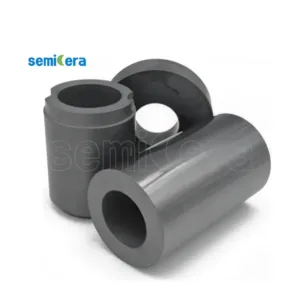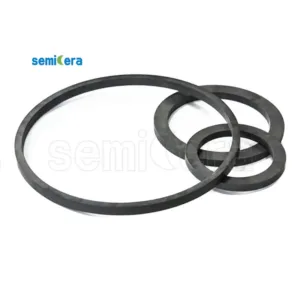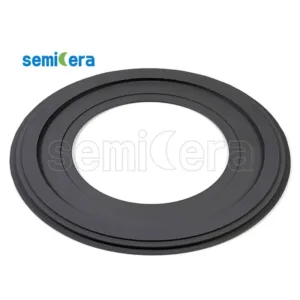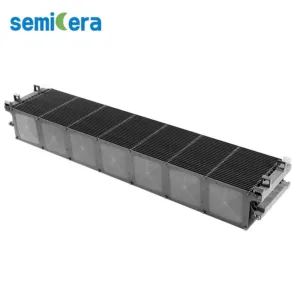
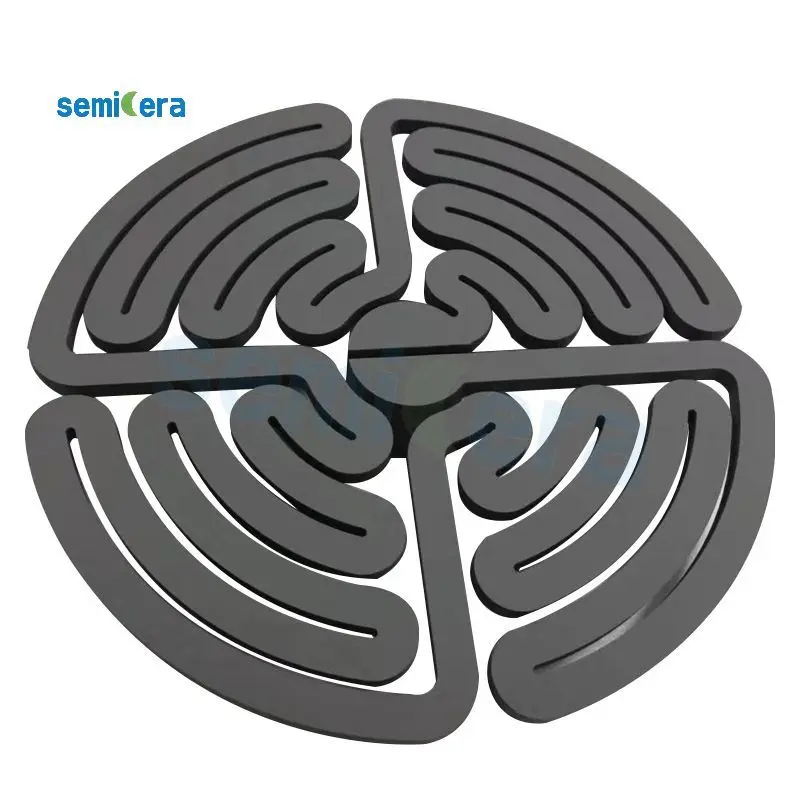
Silicon carbide (SiC) coated heating elements are electric heating components used in high-temperature industrial heat treatment systems. Its base is usually made of silicon carbide or high-purity refractory materials, and a layer of SiC protective coating is prepared on the surface to enhance the high-temperature stability and service life of the material.
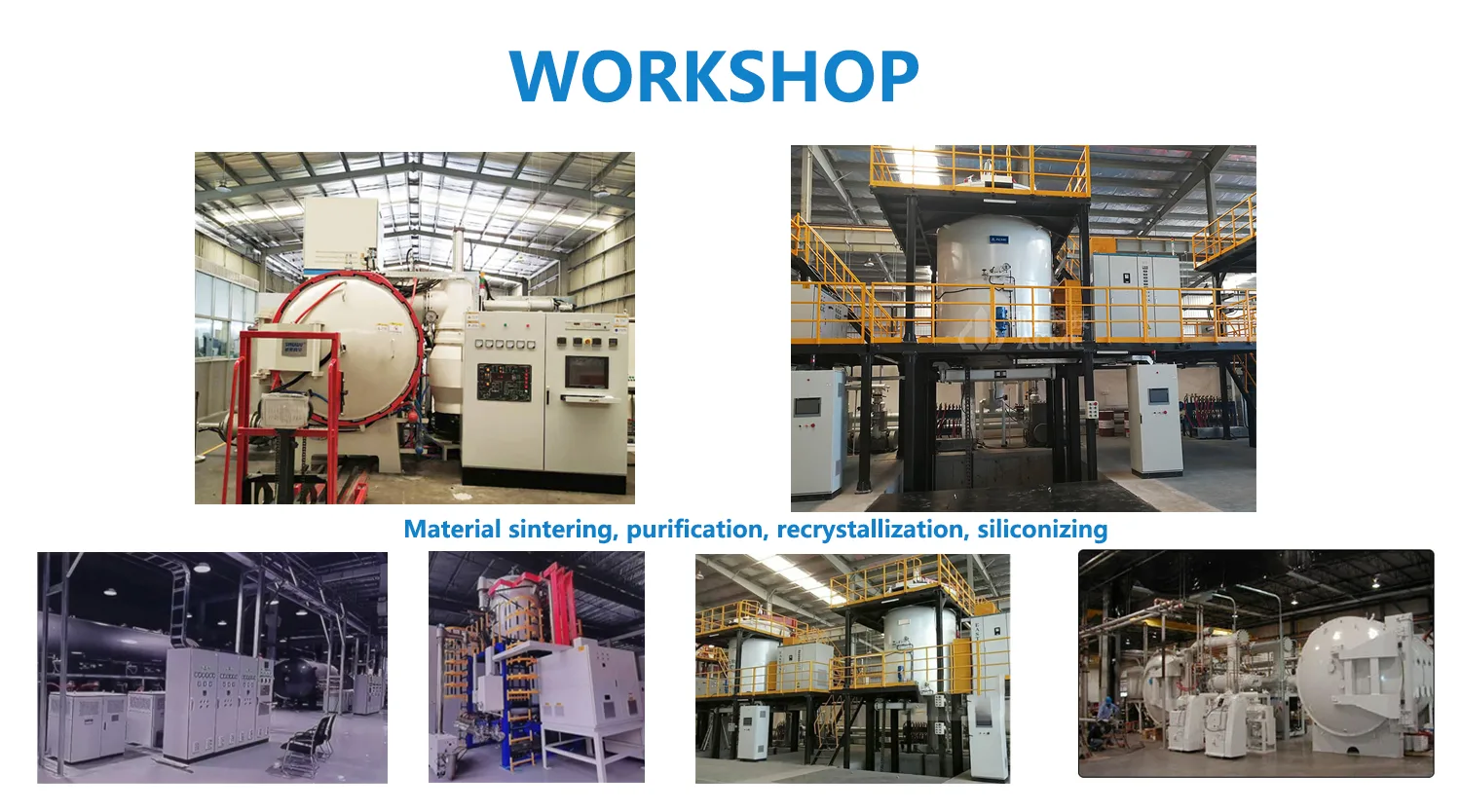
SiC coatings are typically prepared through high-temperature processes such as CVD or advanced ceramic coating technologies, forming a dense, uniform, and chemically stable protective layer that can effectively resist oxidation, high-temperature corrosion, and chemical medium erosion, enabling them to operate stably for a long time in harsh high-temperature environments.
During operation, electrical energy is converted into thermal energy through resistance heating. The heat is efficiently transferred through the surface of SiC and forms a uniform thermal field. Meanwhile, its high emissivity is conducive to far-infrared radiation heating, thereby enhancing the overall heating efficiency.
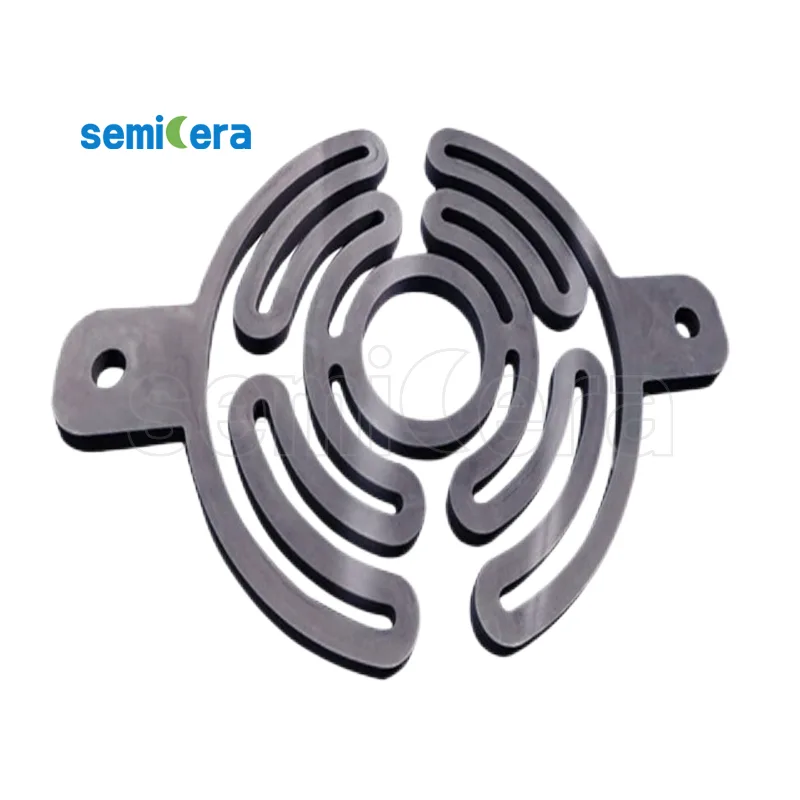
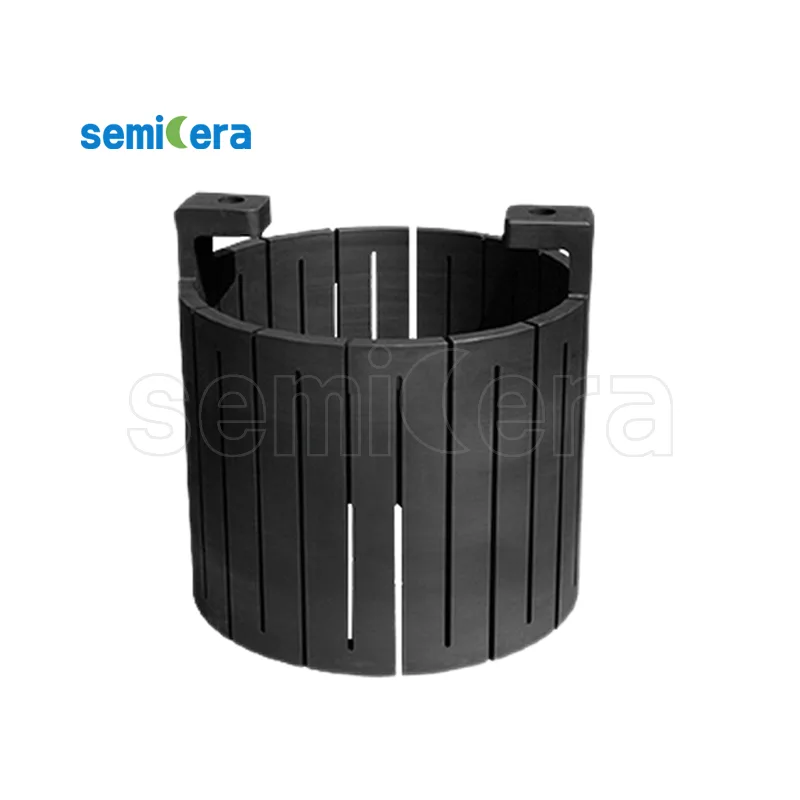
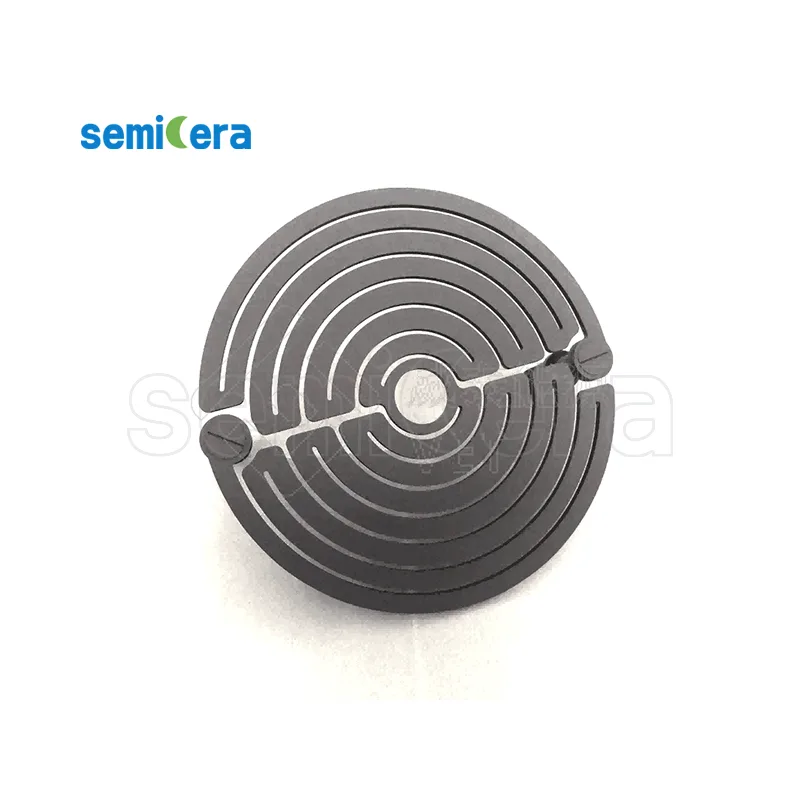
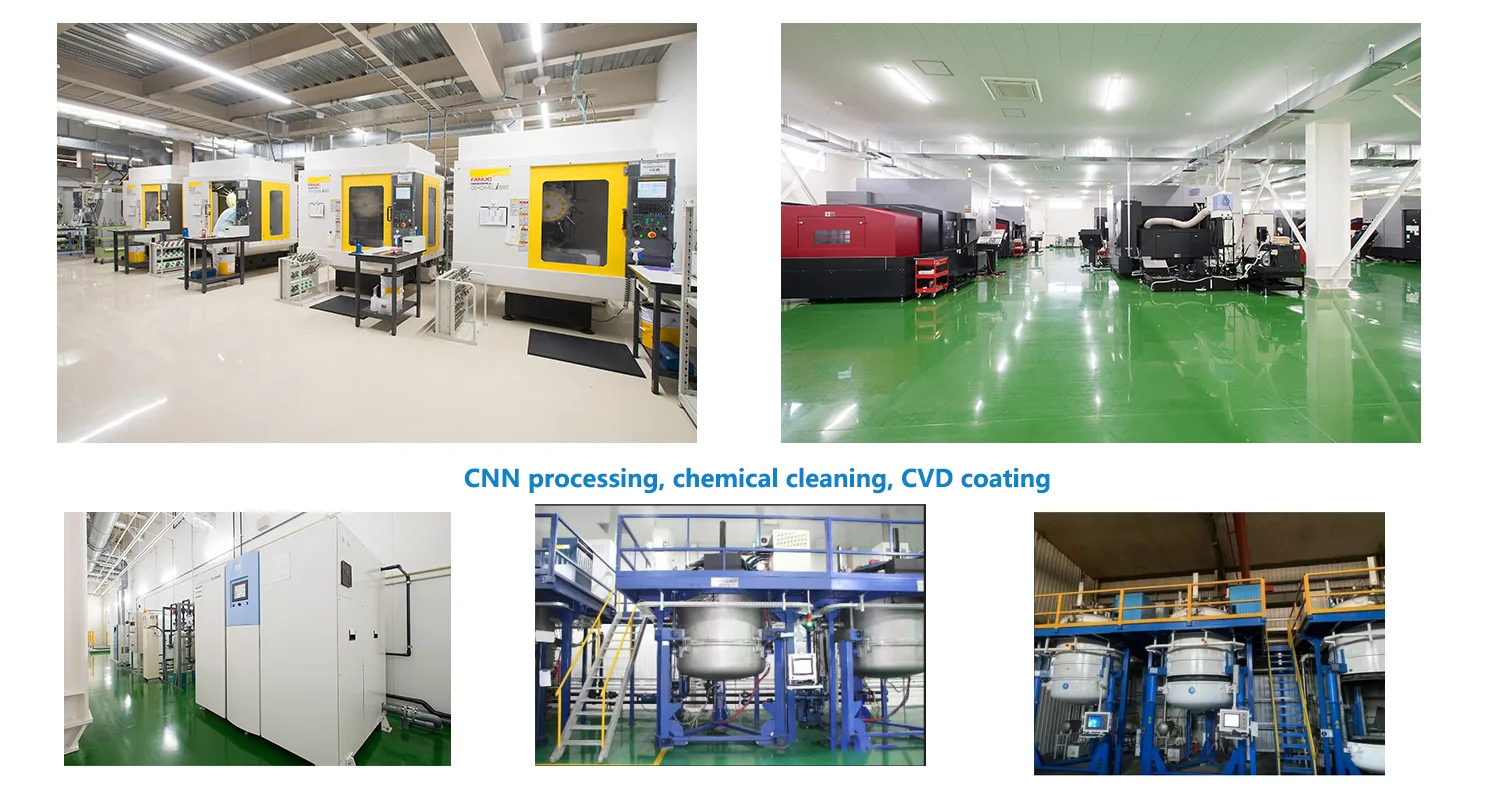
Our company provides CVD silicon carbide (SiC) coating services for graphite, ceramics, and other substrate materials. During the coating process, silicon- and carbon-containing precursor gases react at elevated temperatures to generate high-purity SiC, which is deposited onto the substrate surface to form a dense, uniform, and firmly bonded protective coating. This SiC layer enhances the material’s resistance to high temperatures, oxidation, corrosion, and wear, extending its service life in demanding industrial environments.
1. High temperature oxidation resistance: The oxidation resistance is still very good when the temperature is as high as 1600 C.
2. High purity: made by chemical vapor deposition under high-temperature chlorination conditions.
3. Erosiebestendigheid: hoge hardheid, compact oppervlak, fijne deeltjes.
4. Corrosion resistance: acid, alkali, salt, and organic reagents.
|
SIC-CVD-eigenschappen |
||
| Kristalstructuur | FCC β -fase | |
| Dikte | g/cm ³ | 3.21 |
| Hardheid | Vickers Hardheid | 2500 |
| Korrelgrootte | mm | 2~10 |
| Chemische zuiverheid | % | 99.99995 |
| Warmtecapaciteit | J · kg-1 · K-1 | 640 |
| Sublimatietemperatuur | ℃ | 2700 |
| Felexurale kracht | MPA (RT 4-punts) | 415 |
| Young's Modulus | GPA (4pt Bend, 1300 ℃) | 430 |
| Thermische expansie (CTE) | 10-6K-1 | 4.5 |
| Thermische geleidbaarheid | (W/mk) | 300 |