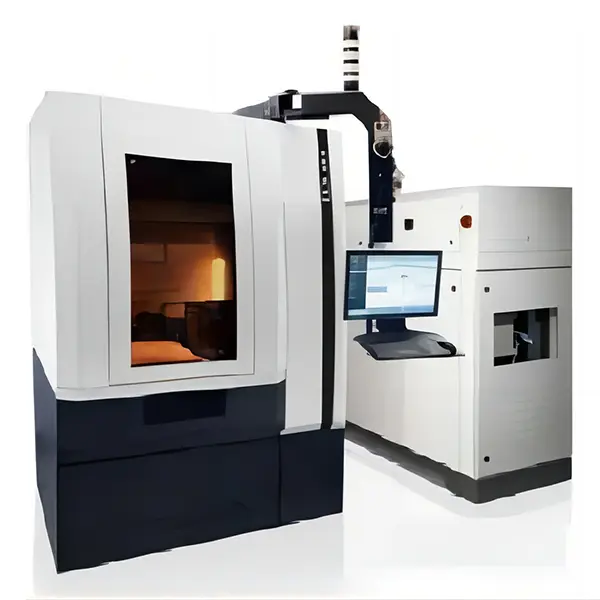
Laser MicroJet (LMJ) technology couples a focused laser beam into a high-speed, stable micro water jet. The laser is guided inside the water column through total internal reflection at the water–air interface, forming an energy beam with a uniform cross-sectional distribution. This mechanism enables highly precise material removal under conditions of controlled directionality, high energy density, and real-time surface cooling.
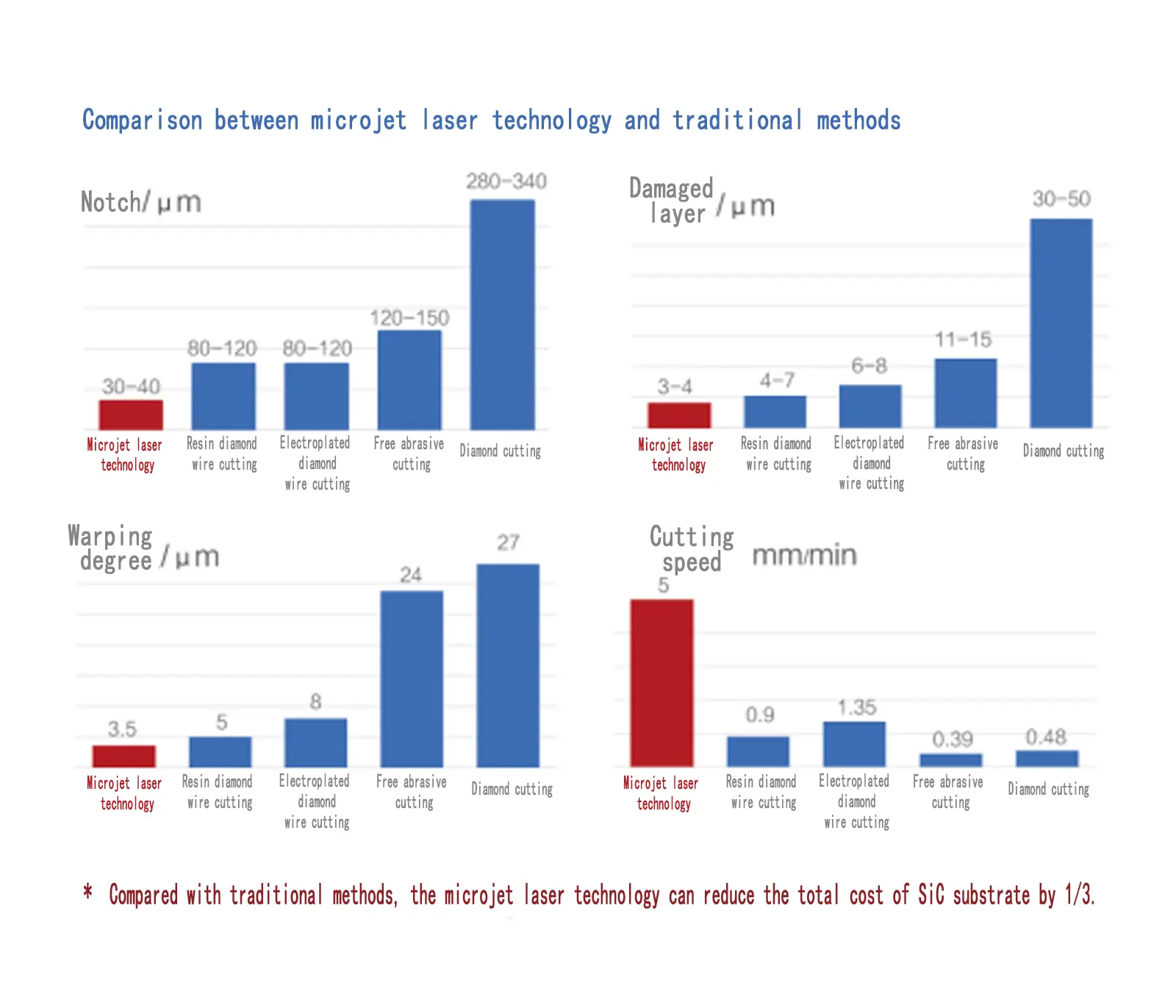
The technology provides extremely narrow kerf width, high processing precision, and minimal thermal impact, making it ideal for the integrated and efficient machining of hard and brittle materials.
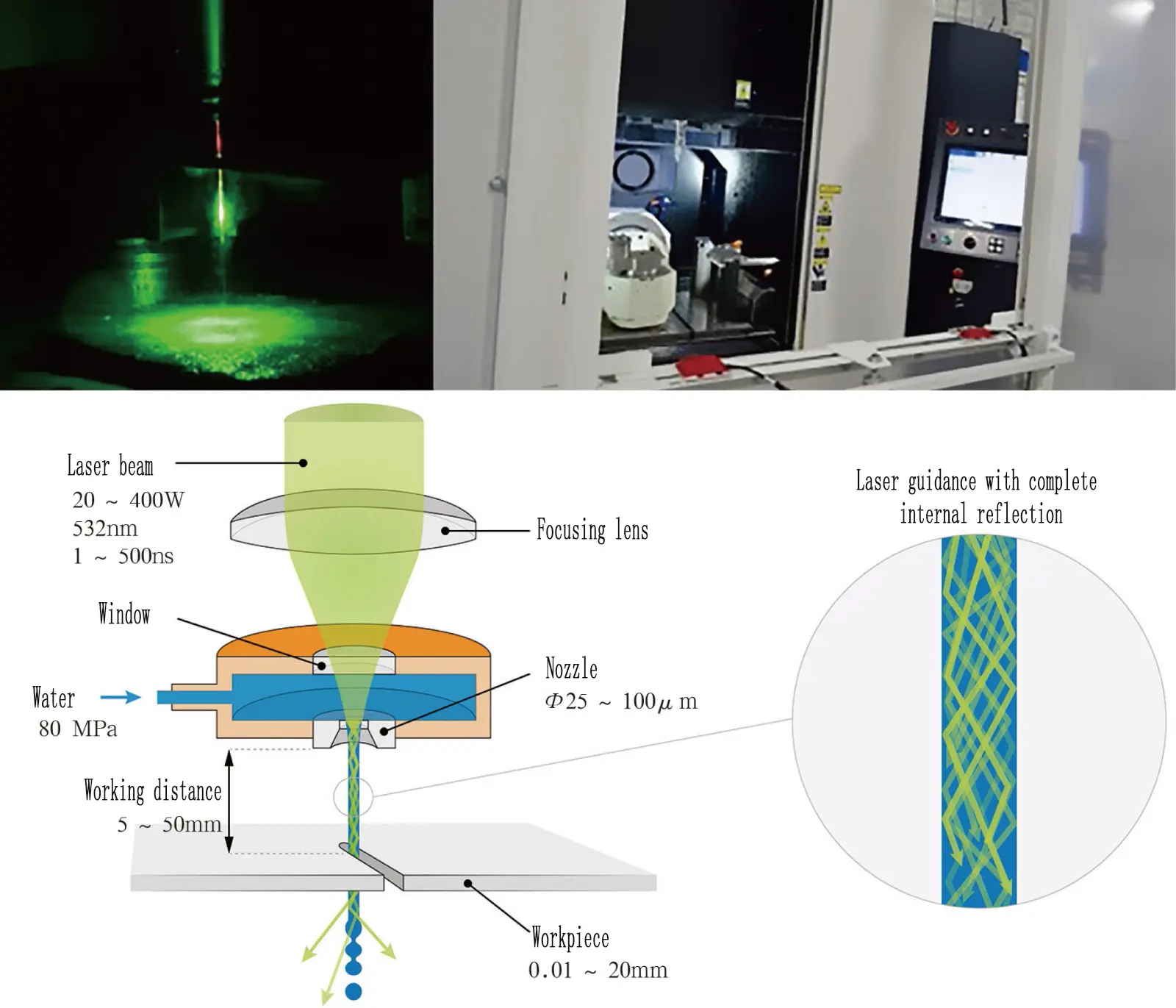
LMJ technology utilizes the difference in optical refractive indices between water and air. The laser pulses are fully reflected within the high-purity water jet, allowing the beam to propagate in a stable manner similar to optical fiber transmission.
Once coupled into the water jet, the laser travels undisturbed inside the column, fully protected from external environmental influences such as dust, plasma, or air turbulence.
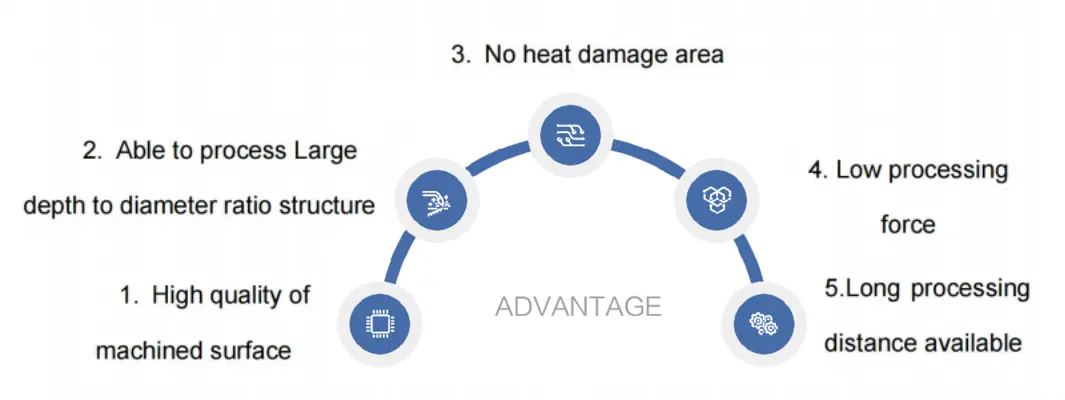
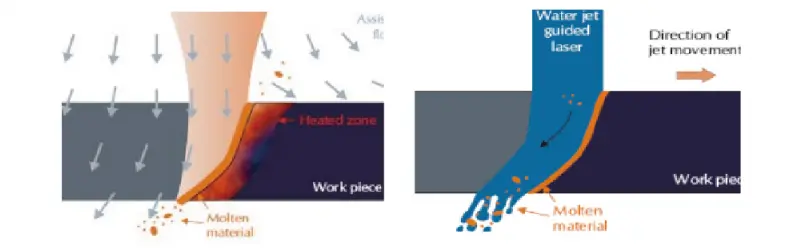
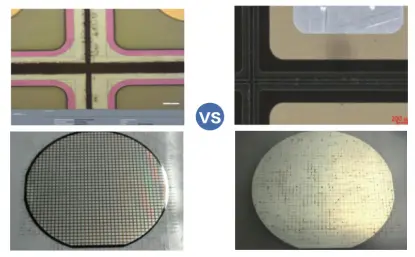
In traditional laser cutting, energy accumulation and heat conduction along the cutting path are the main causes of thermal damage on both sides of the kerf. In contrast, LMJ technology rapidly removes residual heat after each pulse via the water jet, preventing thermal buildup on the workpiece and resulting in a clean and precise cutting edge.
When traditional laser cutting, the accumulation and conduction of energy is the main cause of thermal damage on both sides of the cutting path, and the microjet laser, due to the role of the water column, will quickly take away the residual heat of each pulse will not accumulate on the workpiece, so the cutting path is clean. For the traditional “hidden cut” + “split” method, reduce the processing technology.